


In agriculture, there are many invisible enemies of crops. Among them, the Nematode is one of the most damaging. These microscopic worms live in the soil and attack plant roots, reducing growth, yield, and quality. They are often called the “silent destroyers” because the damage is usually noticed only after it becomes severe.
Types of Nematodes Infecting Plants
There are more than 3,000 species of plant-parasitic Nematodes, but the most common ones affecting crops include:
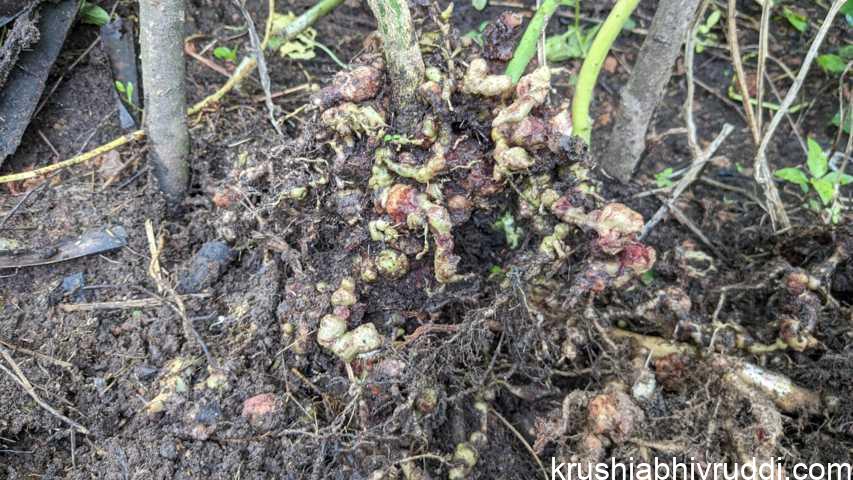
- Root-knot Nematode (Meloidogyne spp.) – Causes galls or knots on roots.
- Cyst Nematode (Heterodera spp., Globodera spp.) – Attacks cereals, potatoes.
- Lesion Nematode (Pratylenchus spp.) – Creates dark lesions on roots.
- Reniform Nematode (Rotylenchulus reniformis) – Common in cotton, vegetables.
- Burrowing Nematode (Radopholus similis) – Damages banana, pepper, coconut.
- Stem and Bulb Nematode (Ditylenchus dipsaci) – Affects onion, garlic.
How Nematodes Enter Plant Roots
Their attack begins when these tiny worms move through soil water films and find plant roots.
- They use a needle-like mouthpart (stylet) to pierce root cells.
- Some enter and feed inside the root, while others remain outside and suck nutrients.
- Infected roots lose their ability to absorb water and nutrients efficiently, weakening the whole plant.
Visual Symptoms of Nematode Attack
Field symptoms often look like nutrient deficiency or water stress, but close examination of roots reveals the truth.
Above-ground symptoms:
- Yellowing of leaves
- Stunted growth
- Wilting during hot hours even with enough water
- Uneven crop stand
Below-ground symptoms: - Root galls or knots (typical of root-knot Nematode)
- Short, stubby roots
- Root lesions and rotting
- Reduced root branching

Nematodes and Crop Loss
The damage caused by Nematode infestations can range from 10% to over 80% yield loss depending on crop, soil type, and management. In high-value crops like banana, black pepper, tomato, and arecanut, Nematode can make the entire planting uneconomical if not controlled.
Organic Control of Nematodes
- Crop rotation with non-host plants.
- Soil solarization – covering moist soil with clear plastic sheets for 4–6 weeks during hot months to kill Nematode eggs and larvae.
- Organic amendments – neem cake, pongamia cake, mustard cake reduce Nematode population.
- Trap crops like marigold (Tagetes spp.) suppress root-knot Nematode.
- Deep ploughing in summer to expose eggs to sunlight.
Biological Nematode Controllers
Several beneficial organisms naturally control Nematode:
- Paecilomyces lilacinus – a fungus that parasitizes eggs.
- Pochonia chlamydosporia – infects and destroys eggs.
- Trichoderma spp. – promotes root health and competes with Nematode.
- Predatory nematodes – feed on harmful species.
Chemical Control
When Nematode infestation is high, chemical nematicides may be necessary:
- Fosthiazate, Oxamyl, Fenamiphos – applied as soil drench or granules.
- Always follow label instructions and safety precautions.
- Use chemicals as part of an Integrated Nematode Management approach to avoid resistance and soil health damage.
Integrated Approach for Nematode Management
- Start with nematode-free planting material.
- Combine organic, biological, and chemical methods.
- Maintain soil organic matter to support natural enemies.
- Regularly monitor root and soil samples for Nematode presence.
✅ Key Message for Farmers:
The Nematode is small but powerful. Early detection, prevention, and integrated management can protect your crop and yield. Don’t wait until plants show severe symptoms—healthy roots are the foundation of healthy crops.


