


In modern horticulture crops, achieving higher yields and better-quality produce depends not only on the major nutrients—Nitrogen (N), Phosphorus (P), and Potassium (K)—but also on micronutrients. Though required in small quantities, micronutrients are essential for plant growth, development, and disease resistance. Neglecting them can lead to hidden hunger in plants, reducing productivity and quality.
What are Micronutrients?
Micronutrients are mineral elements required by horticulture plants in very small amounts, usually less than 100 ppm (parts per million). They play a crucial role in enzyme activation, photosynthesis, flower and fruit development, and resistance to biotic and abiotic stresses. Even a slight deficiency can affect crop performance.
Elements in Micronutrient Mixtures
A balanced micronutrient mixture usually contains the following essential elements:
- Zinc (Zn): Important for enzyme activation, protein synthesis, and growth regulation.
- Iron (Fe): Essential for chlorophyll formation and photosynthesis.
- Manganese (Mn): Supports photosynthesis and nitrogen metabolism.
- Copper (Cu): Plays a role in enzyme activity and lignin synthesis.
- Boron (B): Helps in cell wall formation, pollen germination, and fruit setting.
- Molybdenum (Mo): Required for nitrogen fixation and utilization.
- Chlorine (Cl): Involved in photosynthesis and osmotic regulation (though rarely deficient).
Some formulations also include secondary nutrients like Magnesium (Mg) and Sulphur (S) in small quantities.
Forms of Micronutrients in Agriculture
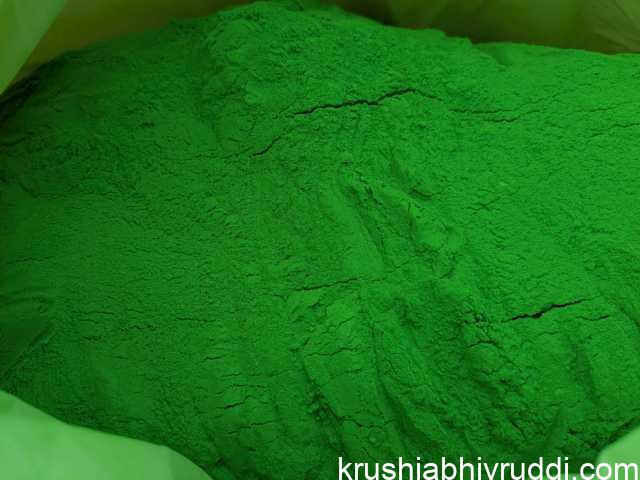
1. Powder Form Micronutrients
Powdered mixtures are widely used for soil application and foliar sprays. They are often fortified with chelated compounds, which enhance solubility and prevent nutrient fixation in soil.
Advantages:
- Easy to mix with fertilizers.
- Long shelf life.
- Cost-effective for bulk use.
2. Liquid Form Micronutrients
Liquid formulations are popular for fertigation and foliar application. They are highly soluble and provide quick absorption.
Micronutrients are available in different grades:
- Soil application grade – applied to root zone for long-term supply.
- Drip grade – fully soluble, ideal for fertigation.
- Foliar grade – sprayed on leaves for quick deficiency correction.
- Dual-use grade – suitable for both drip and foliar applications.
Advantages:
- Rapid correction of deficiencies.
- Suitable for drip irrigation systems.
- Can be combined with plant growth promoters or biostimulants.
When Should Micronutrients Be Used?
The application of micronutrients is beneficial in the following conditions:
- Deficiency Symptoms: Yellowing of leaves (Fe deficiency), poor fruit set (B deficiency), or stunted growth (Zn deficiency).
- Soil Type: Sandy soils, alkaline soils, and highly leached soils are often deficient.
- High Rainfall Areas: Continuous rain washes away soluble nutrients.
- Intensive Farming: Excessive use of NPK fertilizers without micronutrient replenishment.
- High-Yielding Varieties: These demand more balanced nutrition.
How Micronutrients Exhaust from Soil
Micronutrient depletion occurs due to:
- Continuous cropping without replenishment.
- Leaching in heavy rainfall zones.
- Soil pH imbalance: High pH reduces availability of Zn, Fe, and Mn.
- Excessive chemical fertilizers: Overuse of NPK causes nutrient imbalance.
- Soil erosion: Removes topsoil rich in micronutrients.
Mechanisms of Micronutrient Absorption
Plants absorb micronutrients through both roots and leaves:
- Root Absorption:
- Micronutrients are absorbed in ionic form (Zn²⁺, Fe²⁺, Mn²⁺, etc.).
- Chelated forms are more easily absorbed because they prevent fixation.
- Foliar Absorption:
- Nutrients applied directly on leaves penetrate through stomata or cuticle.
- Foliar sprays act faster than soil applications, especially during critical growth stages.
- Fertigation:
- Liquid micronutrients supplied through drip irrigation reach the root zone directly.
- This ensures uniform distribution and higher efficiency.
Best Practices for Farmers
- Use soil testing before applying micronutrient mixtures.
- Prefer chelated micronutrients for better uptake.
- Combine micronutrient sprays with plant growth regulators during flowering and fruiting.
- Alternate between soil application and foliar spray for balanced nutrition.
- Avoid over-application, as excess levels can cause toxicity.
Conclusion
Micronutrients may be required in small amounts, but their role in horticulture crops is enormous. They not only improve plant health but also enhance fruit quality, yield, and resistance to diseases. By adopting proper soil management and timely application of powdered or liquid micronutrient formulations, farmers can ensure sustainable production and profitability


