


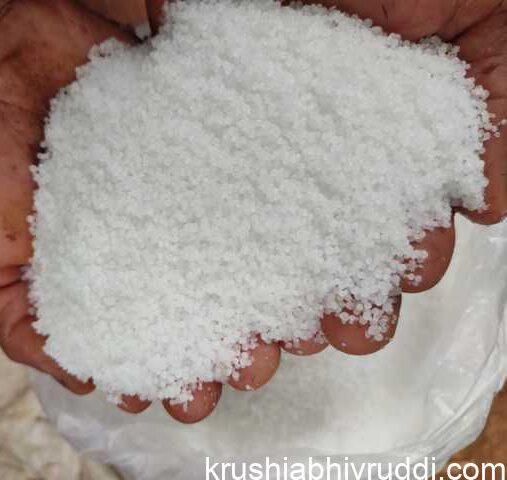
Fertilizers are the backbone of modern farming. Among all, Urea fertilizer is the most widely used nitrogen fertilizer in the world. Farmers prefer it because it is rich in nitrogen, easy to handle, and comparatively cheaper. Urea is a white crystalline substance, highly soluble in water, and supplies about 46% nitrogen, the highest among common solid fertilizers.
What is Urea Fertilizer?
Urea is a man-made chemical fertilizer that provides nitrogen, a nutrient essential for plant growth. Nitrogen helps plants to produce chlorophyll, develop healthy leaves, and increase overall yield. Because of its high nutrient content and easy availability, urea is also called the “king of fertilizers.”
Introduction of Urea in Place of Ammonium Fertilizers
Before urea was developed, farmers mainly used ammonium sulfate and ammonium nitrate as nitrogen sources. However, these fertilizers contained less nitrogen (20–35%), required higher transport cost, and sometimes made the soil acidic. Urea was introduced commercially in the early 20th century and rapidly replaced ammonium fertilizers because of its higher nitrogen content, easy storage, and lower cost.
How Urea is Manufactured
Urea is produced in factories by combining ammonia (NH₃) and carbon dioxide (CO₂) under high temperature and pressure. The reaction forms a liquid, which is then cooled and solidified into prills or granules. These granules are uniform, hard, and easy to spread in the field.
Application of Urea to Plants
Urea is usually applied directly to the soil, either by broadcasting, band placement, or by mixing with irrigation water. It should not be left on the soil surface for long, because nitrogen loss is higher when exposed to air. Urea can also be mixed with other fertilizers but should not be stored for long in such mixtures, as it may react with them.
How Urea Acts in Soil
Once applied, urea dissolves in soil moisture and is converted by the enzyme urease into ammonium carbonate. This ammonium form is then gradually converted into nitrate, which plants absorb. If the soil remains moist and has good organic matter, nitrogen availability improves. However, in dry soil or in alkaline conditions, a lot of nitrogen can be lost to the air.
Soil organic matter and urea uptake:
- Organic matter improves soil structure → When soil is rich in organic matter, it holds more water and has better aeration. This allows urea to dissolve evenly and move into the root zone, where plants can absorb nitrogen.
- Microbial activity → Soil organic matter supports a large population of beneficial microbes. These microbes help in the conversion of urea → ammonium → nitrate, which plants take up. So, higher organic matter = faster and more efficient nitrogen conversion.
- Buffering effect → Organic matter reduces nitrogen loss by binding ammonium and minimizing volatilization (loss as ammonia gas). In sandy or alkaline soils with very little organic matter, more nitrogen from urea is lost to the atmosphere.
- Reduced leaching → Organic matter increases the soil’s cation exchange capacity (CEC). This helps in holding nitrogen forms (like ammonium) and prevents them from leaching away with rainwater.
👉 In short: Soils rich in organic matter make urea more efficient, reduce losses, and increase nitrogen uptake by plants. Poor soils with less organic matter lose more nitrogen and give lower fertilizer efficiency.
Evaporation and Nitrogen Loss
Urea loses nitrogen mainly through a process called volatilization. When urea is spread on the soil surface, it reacts with moisture and releases ammonia gas, which escapes into the atmosphere. This leads to a major loss of nitrogen, especially in hot, dry, or sandy soils.
How to Restrict Nitrogen Loss
To minimize loss, farmers can follow these methods:
- Incorporation into soil: Cover urea with soil immediately after application.
- Apply before irrigation or rainfall: Water helps to carry urea deeper into the soil.
- Use of urease inhibitors: Special chemicals that slow down the conversion of urea, reducing losses.
- Controlled release urea: Coated granules that release nitrogen slowly.
Split vs Single Application
Applying the total dose of urea at once often leads to heavy losses. Therefore, split application is recommended. Instead of one large dose, apply smaller amounts in 2–3 stages according to crop growth. For example, in paddy, part of urea is applied at transplanting, then at tillering stage, and finally before flowering. This ensures better nitrogen use efficiency and higher yields.
Foliar Spray of Urea
Urea is highly soluble in water and can also be used as a foliar spray in low concentration (1–2%). Foliar spray helps in quick absorption and is useful when crops show nitrogen deficiency at critical growth stages. However, higher concentrations may burn the leaves, so care must be taken.
Harmful Effects of Urea Fertilizer
While urea is highly beneficial, excessive or wrong use can harm both soil and plants:
- Soil damage: Continuous use without organic matter can make soil hard and less fertile.
- Environmental pollution: Loss of nitrogen to the air contributes to greenhouse gases.
- Water pollution: Nitrate leaching contaminates groundwater.
- Plant stress: Overuse can cause excessive vegetative growth, making plants weak against pests and diseases.
Urea fertilizer has revolutionized agriculture by providing a cheap and effective source of nitrogen. However, farmers must use it wisely—through proper timing, split applications, and soil incorporation—to prevent nitrogen losses and environmental harm. Balanced use of urea along with organic manures and other fertilizers ensures sustainable soil health and higher yields.


