


Leaf spot disease in arecanut is a common foliar problem observed mainly during humid and rainy seasons. Yellow leaf spot disease caused by the fungus Colletotrichum affects the leaves of arecanut palms and reduces their photosynthetic efficiency. Although leaf spot disease is often considered mild, repeated infection weakens palms, reduces growth, and indirectly affects nut yield. Proper understanding of leaf spot symptoms, spread, and management practices is essential for effective disease control in arecanut plantations.
Nature of Damage
Yellow leaf spot disease mainly affects the leaves of the arecanut palm. The disease causes a gradual reduction in green leaf area, which lowers the plant’s ability to prepare food. While it rarely causes death of palms, continuous infection reduces plant vigour, delays flowering, and results in poor nut development. Young palms and gardens under nutritional or moisture stress show more severe symptoms.
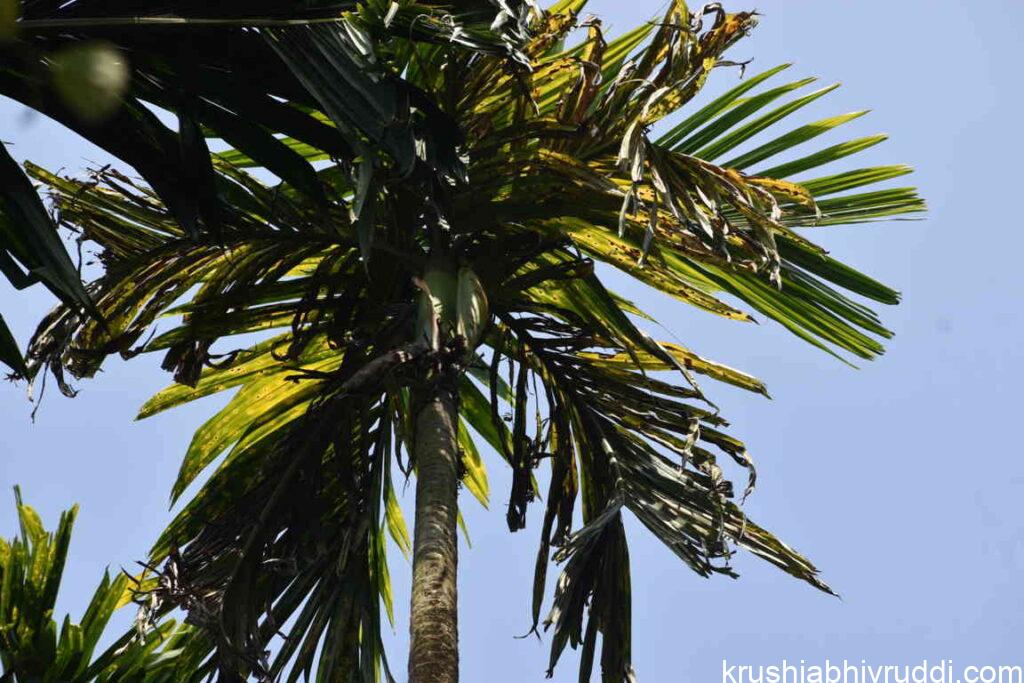
Symptoms of the Disease
The disease behaves differently in young and older leaves.
Young leaves (latent or non-visible infection):
Infection usually starts at an early stage but remains hidden. There are no visible symptoms initially, even though the fungus is present inside the leaf tissues. As the leaf matures, these hidden infections become visible.
Older leaves (visible infection):
Small yellow spots appear on the leaflets. These spots gradually increase in size and turn yellowish-brown to dark brown. In advanced stages, the centre of the spot becomes dry and necrotic. Several spots may join together, leading to partial drying of leaf tips and margins. Because early infection is not visible, timely detection becomes difficult.
Season of Disease Occurrence
Colletotrichum becomes active mainly during the monsoon and post-monsoon periods. High humidity, continuous rainfall, cloudy weather, and moderate temperatures favour fungal growth and spread. leaf spot Disease incidence is low during hot and dry months but increases rapidly when moisture levels rise.
Mode of Spread
The fungus spreads through:
- Rain splash carrying spores from diseased leaves to healthy leaves
- Wind-blown spores during storms
- Infected plant debris left in the field
- Latent infections already present in young leaves
Dense planting, poor aeration, and prolonged leaf wetness further increase disease spread.
Natural Control
During dry weather, disease development may slow down, creating an impression that the disease is controlled naturally. However, the fungus remains inside the plant as latent infection and reappears when favourable conditions return. Therefore, natural control alone is not sufficient in areas where the disease is common.
Time of Fungicide Application
Fungicides are most effective when applied preventively or at the early stage of disease development. Ideal times for spraying include:
- Just before or at the onset of monsoon
- When early symptoms appear on older leaves
- After long rainy periods with high humidity
Spraying should not be delayed until severe leaf damage occurs, as fungicides mainly prevent further spread rather than curing heavily affected tissues.
Fungicides for Disease Control
Both systemic and contact fungicides are useful when applied properly.
Commonly recommended fungicides include:
- Propiconazole – 1 ml per. Liter/water
- Hexaconazole -1 ml per. Liter/water
- Carbendazim -1 gram per. Liter/water
- Mancozeb (protective fungicide) 2.5 gram per. Liter/water
Tebuconazole (generic products such as Bonus):
Tebuconazole is a systemic triazole fungicide that stops fungal growth by inhibiting ergosterol synthesis. It is effective against yellow leaf spot, anthracnose, and other Colletotrichum diseases. It works well as a preventive spray or during early infection and helps control hidden infections in young leaves.
General dose:
1 ml per litre of water (follow label recommendations)
Bayer Nativo (Tebuconazole + Trifloxystrobin):
Nativo is a combination fungicide and is one of the most effective options for managing this disease. Tebuconazole provides curative action, while Trifloxystrobin gives protective action and prevents spore formation. It controls both visible and non-visible infections and is suitable for areas with repeated disease occurrence.
Dose:
0.4–0.5 g per litre of water
Farmers often mix contact fungicides like Mancozeb or Propineb with systemic fungicides. This is not always necessary. In most cases, systemic fungicides alone are sufficient. Contact fungicides may be added only once during very severe infection or under continuous rainy conditions.
Removal of Infected Leaves
Cutting and removing severely infected and dried leaves is useful, especially when disease intensity is high. This reduces the fungal spore load, improves air circulation, and allows better spray coverage. Excessive removal of green leaves should be avoided, as they are essential for growth.
Mixing Nutrients with Fungicides
Compatible micronutrients such as magnesium, zinc, and boron can be mixed with fungicides to improve leaf health and recovery. Avoid mixing fungicides with strongly alkaline fertilizers, as this may reduce their effectiveness.
Ideal Spraying Time
Spraying should be done in the early morning or late evening. At these times, wind speed is low, evaporation losses are minimal, and spray retention on leaves is better. Avoid spraying during hot afternoons or before heavy rainfall.
Soil and Cultural Practices
Poor drainage, waterlogging, and nutrient imbalance increase disease susceptibility. Maintaining good drainage, balanced fertilization, proper spacing, and field sanitation improves plant resistance and reduces disease pressure.
Conclusion
Yellow leaf spot disease of arecanut caused by Colletotrichum is a seasonal disease favoured by humid conditions. Though not always severe, repeated infection can reduce plant vigour and yield. Early preventive sprays, proper fungicide use, good sanitation, balanced nutrition, and suitable cultural practices are essential for effective disease management and sustainable arecanut production.


