


Pruning or shaping or trimming is one of the most important cultural practices in fruit crop management. It involves the selective removal of unwanted, diseased, weak, or excess branches to improve plant health, structure, and productivity. When done correctly and at the right time, trimming plays a major role in enhancing flowering, improving fruit yield and quality, maintaining tree shape, and reducing pest and disease incidence. However, it is equally important to understand that not all fruit trees respond in the same way to pruning; while some benefit greatly, others require only minimal or corrective pruning.
Role of Pruning in Improving Yield and Fruit Quality:
Shaping helps in regulating the balance between vegetative growth and fruiting. Excessive branches compete for nutrients, water, and sunlight, resulting in poor flowering and small, low-quality fruits. By removing unproductive or overcrowded branches, the plant’s energy is redirected toward healthy shoots and fruit-bearing spurs. This leads to better fruit size, improved color, uniform ripening, and higher market value. In crops like apple, guava, grape, and peach, regular trimming is essential for maintaining consistent yield year after year.
Enhancement of Flowering and Fruiting:
Flowering in many fruit crops occurs on new shoots or spurs that develop after shaping. Proper trimming stimulates the emergence of healthy new shoots, which later bear flowers and fruits. For example, grapes and peaches produce fruits on current season growth, making pruning crucial for flower initiation. By removing old and unproductive wood, pruning encourages vigorous shoot development and increases the number of fruitful buds, ultimately improving fruit set.

Shaping and Canopy Management:
One of the major advantages of trimmng is the development of a strong and well-balanced tree framework. Training and pruning help in shaping young trees to a desired form, such as central leader, open center, or modified leader systems. A well-shaped canopy allows better light penetration and air circulation within the tree. This not only improves photosynthesis but also ensures uniform fruit development throughout the canopy. Proper tree shape also prevents branch breakage due to heavy fruit load or strong winds.
Easy to Harvest and Orchard Operations:
Shaped trees are easier to manage during harvesting and other orchard operations such as spraying, thinning, and pruning itself. Maintaining tree height and spread through regular pruning reduces the need for ladders and minimizes fruit damage during harvesting. Lower and well-spread canopies improve worker efficiency, reduce labour costs, and enhance overall orchard safety.
Pest and Disease Management:
Shaping plays a significant role in integrated pest and disease management. Removal of diseased, dead, and infested branches helps in eliminating sources of infection and pest multiplication. Improved air circulation and light penetration reduce humidity within the canopy, creating unfavourable conditions for fungal diseases such as powdery mildew, anthracnose, and fruit rots. Pruning also allows better penetration of pesticides and biological sprays, increasing their effectiveness and reducing chemical usage. The major threat of fruit fly is minimised by net covering upon trimmed and hight managed plants.
Rejuvenation of Old and Unproductive Trees:
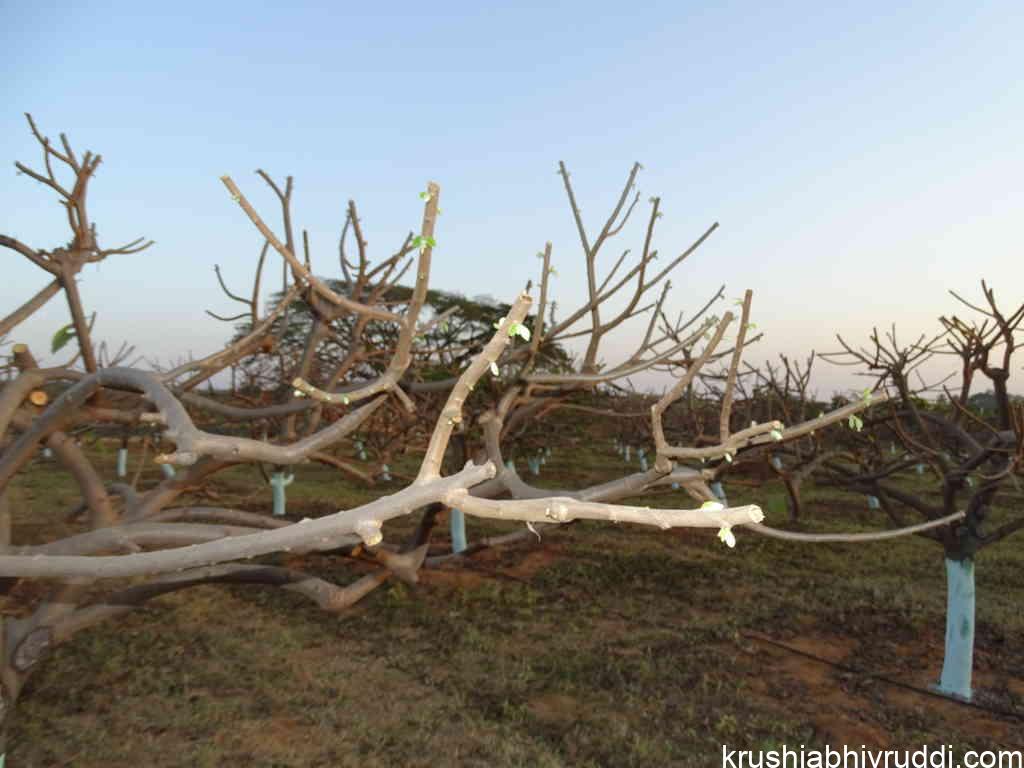
In neglected or aged orchards, productivity often declines due to dense canopies and weak shoot growth. Rejuvenation shaping helps in restoring such trees by removing old wood and stimulating fresh, vigorous growth. Crops like guava and pomegranate respond well to rejuvenation trimming, resulting in improved flowering and yield in subsequent seasons. Here there was a option to make in-situ grafting of new variety.
Variation in Response among Fruit Crops:
While many fruit trees respond positively to pruning, some crops require caution. Deciduous fruits such as apple, pear, peach, plum, grape, and fig show excellent response to regular shaping. Similarly, guava, pomegranate, and ber benefit from systematic shaping. On the other hand, crops like mango, jackfruit, sapota, and litchi do not tolerate heavy trimming. In these species, only light or corrective pruning is recommended to remove diseased or crossing branches, as excessive pruning may reduce flowering and yield.
Conclusion
Pruning is both an art and a science that requires proper knowledge of crop behaviour, growth habit, and bearing nature. When practiced correctly, it improves yield, enhances flowering, ensures better fruit quality, simplifies harvesting, and aids in pest and disease control. Understanding which fruit crops respond well to trimming and applying suitable pruning techniques at the right time are essential for sustainable and profitable fruit production. A well-shaped orchard is not only productive but also healthier, easier to manage, and more resilient in the long run.


