


Agriculture today faces continuous pressure from pests and diseases that threaten crop yield and quality. To manage these challenges, pesticides and fungicides have become essential tools for farmers. However, the effectiveness of these chemicals does not depend only on their strength, but on how systematically and correctly they are used. Unfortunately, many farmers—especially those who are untrained—often apply higher or lower doses than recommended, without proper knowledge of water proportion, spray volume, or application method. Such practices may give temporary results, but in the long run they create serious problems for crops, farmers, consumers, and the environment. Understanding the correct dose, method of application, and consequences of misuse is crucial for sustainable crop protection.
Lack of Dose Knowledge Among Farmers:
One of the most common issues in the field is the belief that “higher dose gives better control.” Many farmers increase the quantity of pesticide or fungicide assuming faster and stronger action against pests or diseases. At the same time, some farmers reduce the dose to save cost, unaware that under-dosing can be equally harmful. In many cases, farmers also do not know the correct proportion of chemical to water, leading to uneven spray concentration. These mistakes mainly occur due to lack of training, improper guidance, or dependence on hearsay rather than scientific recommendations.
Problems Caused by Higher-than-Recommended Dose
Using pesticides and fungicides at higher doses creates multiple problems. First, it causes phytotoxicity, where crops show leaf burn, yellowing, stunted growth, flower drop, or fruit damage. Instead of protecting the crop, the chemical itself becomes a stress factor. Second, excessive chemical use leaves high residues on produce, making food unsafe for consumers and sometimes leading to rejection in markets and exports. Third, higher doses increase input cost without proportionate benefit, reducing farmers’ profit. Most importantly, repeated overuse accelerates resistance development in pests and pathogens, making future control extremely difficult.
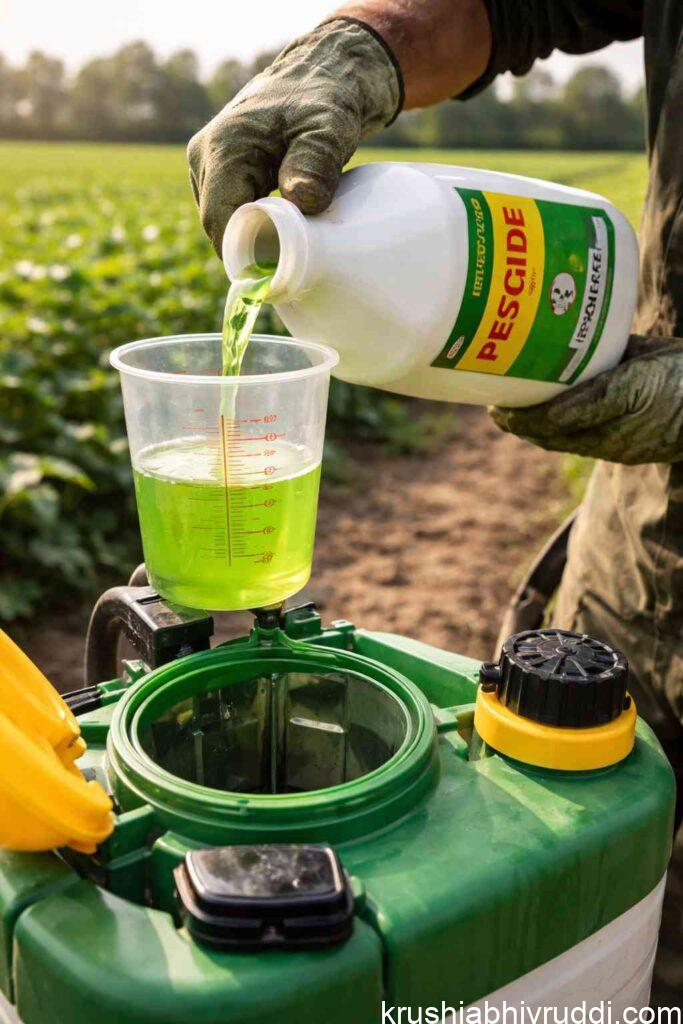
Problems Caused by Lower-than-Recommended Dose:
Using a lower dose than recommended may appear economical, but it is risky. Low doses often fail to kill pests or pathogens completely. Instead, they weaken them temporarily, allowing survival and recovery. This leads to poor control, repeated spraying, and higher overall cost. Sub-lethal doses are one of the main reasons for resistance development, as pests and pathogens adapt to survive chemical exposure. Over time, farmers may notice that the same pesticide no longer works, even at higher doses.
Resistance: A Serious Long-Term Threat:
When pests or pathogens develop resistance, the chemical becomes ineffective. Resistant populations multiply rapidly, forcing farmers to use stronger chemicals or higher doses, creating a vicious cycle. Resistance also reduces the number of available effective molecules in the market. Eventually, farmers face increased production costs, frequent crop losses, and limited control options. Resistance is not a sudden event—it is the result of continuous misuse, overuse, and improper dosing of pesticides and fungicides.
Systemic vs Contact Pesticides and Fungicides:
Understanding the type of chemical is essential for correct application.
Systemic pesticides and fungicides are absorbed by the plant and transported through tissues. They are effective against pests and diseases feeding or developing inside plant parts. For systemic chemicals, correct dose and water volume are critical, as under-dosing leads to poor absorption, while over-dosing increases residue and resistance risk. Uniform spray coverage and proper timing are essential.
Contact pesticides and fungicides, on the other hand, act only where they touch. They do not move inside the plant. Therefore, spray coverage is more important than concentration. Using insufficient spray volume leads to untreated plant surfaces, while excessive concentration can damage leaves without improving control.
Spray Quantity and Application Method:
Spray quantity should match crop stage, canopy size, and equipment used. Young crops require lower spray volume, while fully grown crops need higher volume for complete coverage. Sprayers should be calibrated to ensure uniform delivery. Spraying during calm weather, preferably early morning or evening, improves effectiveness and reduces drift and wastage.
Conclusion
Systematic use of pesticides and fungicides means applying the right chemical, at the right dose, with the right amount of water, using the right method, at the right time. Both overuse and underuse create serious problems, including crop damage, resistance development, increased costs, and environmental harm. Farmer awareness, training, and adherence to recommended guidelines are essential for sustainable pest and disease management. When used scientifically, pesticides and fungicides protect crops effectively while safeguarding farmer income, consumer health, and the environment


