


In most farms today, we see one common trend – farmers apply only NPK nutrients (Nitrogen, Phosphorus, Potassium) to their crops. These are indeed the major nutrients, but they are not the only nutrients a plant needs. Secondary nutrient like Calcium (Ca), Magnesium (Mg), and Sulphur (S) are equally important. Unfortunately, their importance is often overlooked, leading to declining soil health and plant performance over time.
In this article, we will focus on Ca – a nutrient that is as important as nitrogen for healthy plant growth, yet often ignored in fertilizer schedules.
Why Calcium is Important in Horticulture Crops
This plays two equally vital roles:
- For Plants:
- Strengthens cell walls, making plants more resistant to diseases and pests.
- Supports proper root development and branching.
- Helps in nutrient uptake and movement within the plant.
- Prevents disorders like blossom end rot in tomato & capsicum, bitter pit in apple, tip burn in lettuce & cabbage, and cracking in fruits.
- For Soil:
- Improves soil structure by binding clay particles and creating a crumbly texture for better aeration and drainage.
- Balances soil pH when applied in the form of lime (for acidic soils).
- Enhances activity of beneficial soil microbes.
What Happens If Farmers Don’t Use Ca
If Ca is not supplied regularly, the following problems can occur:
- In Plants:
- Soft, weak stems prone to lodging.
- Poor fruit quality, cracking, rotting, or black spots.
- Weak roots leading to nutrient deficiency symptoms even if NPK is sufficient.
- In Soil:
- Soil becomes hard and compact.
- Acidic conditions develop over time.
- Reduced water infiltration and aeration.
- Sources of Ca for Farmers
- Ca. is available from natural, mineral, and industrial sources. The choice depends on rainfall pattern, soil type, and crop requirement.
| Source | Ca Content (%) | Best For | Extra Benefits |
| Agricultural Lime (CaCO₃) | 35–40% | Acidic soils in low rainfall areas | Raises pH slowly, improves soil structure |
| Dolomite (CaMg(CO₃)₂) | 20–22% Ca + 10–12% Mg | Low rainfall areas with magnesium deficiency | Supplies both Ca and Mg |
| Gypsum (CaSO₄·2H₂O) | 20–23% | High rainfall areas, neutral/alkaline soils | Does not raise pH, adds sulphur |
| Calcium Nitrate [Ca(NO₃)₂] | 18–19% | Drip irrigation & fertigation, high-value crops | Supplies Ca + nitrogen in nitrate form |
| Bone Meal | 25–30% | Organic farming | Also adds phosphorus |
| Shell/Lime Grit | 35–38% | Coastal regions | Slow-release Ca |
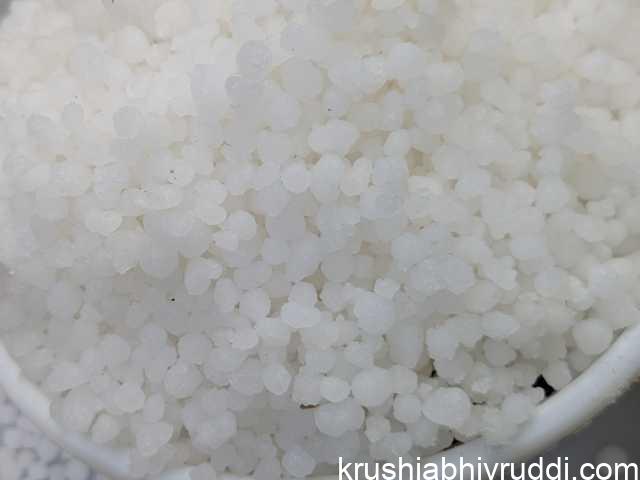
Which is Best for Different Rainfall Areas
- Heavy Rainfall Areas:
- Use Gypsum – because it supplies Ca. without raising soil pH (which is already acidic in heavy rains).
- Calcium Nitrate in fertigation for high-value crops ensures quick Ca supply even in leaching-prone soils.
- Low Rainfall Areas:
- Use Agricultural Lime or Dolomite to correct acidity and slowly release Ca.
- These materials work well because low rainfall means less leaching.
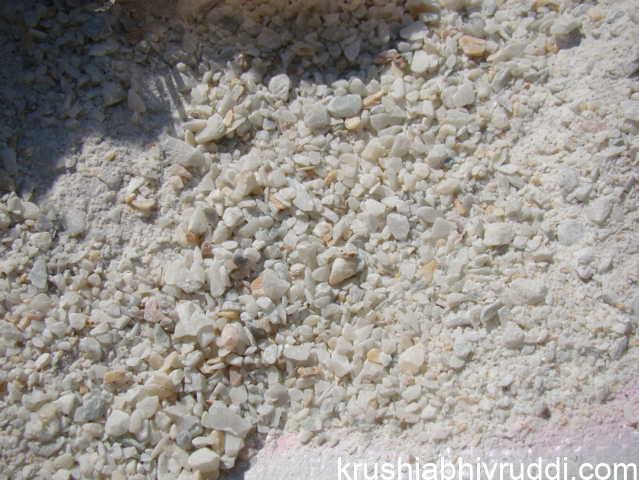
How Much Ca is Needed per Square Meter of Soil
- General horticulture crops require 150–250 kg of elemental Ca per hectare per year.
- This equals 15–25 grams per square meter (depending on crop type and soil test results).
- Exact dosage should be decided after a soil test, because excess Ca can lock up other nutrients like potassium and magnesium.
Ca for Soil Amendment vs. Plant Requirement
- As a Soil Amendment:
- Applied in the form of lime or gypsum to correct soil structure and pH.
- Larger quantities are used (500–2000 kg/ha) based on soil acidity and texture.
- As a Plant Nutrient:
- Applied in smaller, frequent doses via fertigation, foliar spray, or granular fertilizers.
Ensures continuous availability during flowering and fruiting stages
Key Takeaways for Farmers
- Ca is not just an “extra” nutrient – it is a core requirement for healthy crops.
- Always test soil before applying large amounts of Ca.
- Choose the right source based on rainfall pattern and soil pH.
- Don’t wait for visible Ca deficiency; preventive application maintains yield and quality.
A well-balanced nutrition program that includes NPK + secondary nutrients like Ca, Mg, and Sulphur ensures higher yield, better quality, and long-term soil health


