


Cinnamon (Cinnamomum verum and C. cassia) is a valuable evergreen tree belonging to the Lauraceae family. It is cultivated for its aromatic bark, leaves, bulbs, and roots, widely used as spice, medicine, and essential oil. Known as the “sweet wood,” cinnamon has been part of traditional medicine and global cuisine for centuries. With increasing demand in food, pharmaceuticals, and cosmetics, cinnamon farming offers profitable opportunities for growers.
Planting Method
- Climate & Soil: Cinnamon thrives in tropical humid climates, 27–32°C temperature, and well-drained sandy loam to red soils with pH 4.5–6.
- Propagation: Raised mainly through seeds or rooted cuttings, but newer vegetative propagation techniques ensure uniform plantations.
- Spacing: Plants are usually spaced at 2 × 2 m or 3 × 3 m, accommodating 1,000–2,500 plants per hectare.
- Planting Season: The onset of monsoon (June–July) is ideal for transplanting healthy seedlings.
New Hybrids and Varieties
Research institutions like Indian Institute of Spices Research (IISR), Calicut have released improved strains and hybrids with higher bark yield, better oil content, and disease tolerance. Notable selections include Navashree and Nityashree for quality bark and essential oil. In Maharashtra, Konkan Krishi Vidyapeeth (Dapoli) introduced a promising variety named ‘Konkan Tej’, which is well-adapted to the Konkan region, offering farmers good bark yield and better tolerance to local conditions.Globally, Sri Lankan true cinnamon (C. verum) is prized for premium quality, while C. cassia is widely grown in Indonesia and China.
Harvesting Practices
- First harvest is possible after 3–4 years of planting.
- Shoots are cut close to ground level, and the bark is peeled after soaking.
- Harvest frequency is once in 2 years depending on shoot growth.
- Leaves are collected simultaneously for leaf oil extraction.
Flower Bud Harvesting:
Cinnamon trees usually start flowering after 4–5 years of planting. The unopened flower buds, popularly known as buds or cloves of cinnamon, are harvested at the tight-bud stage and carefully dried. These dried buds fetch a high market price due to their strong aroma and medicinal value. With age, the yield of buds increases steadily, adding another profitable product from this spice.
Demand for Bark, Bulbs, and Leaves
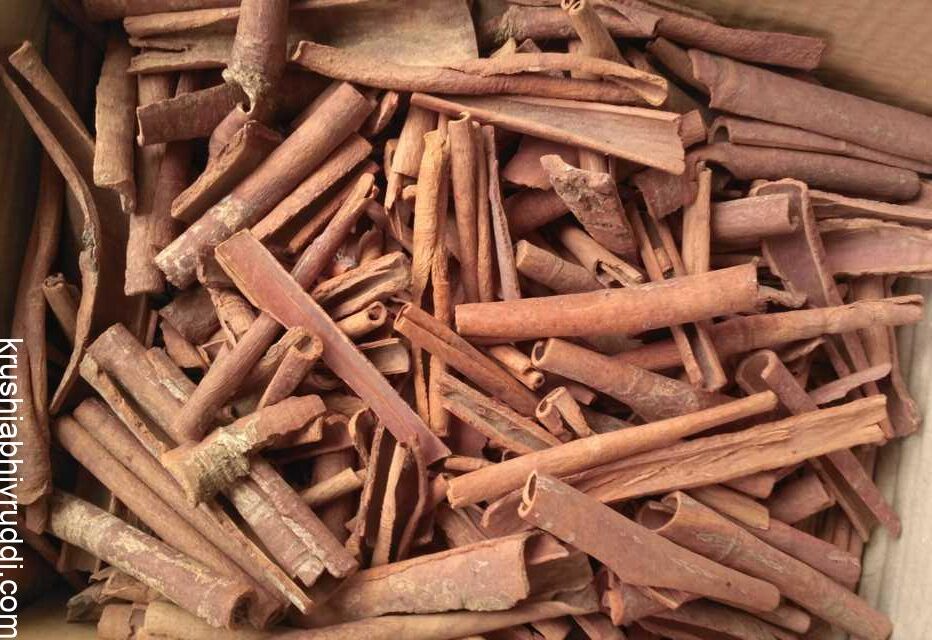
- Bark: Used in spice blends, bakery, beverages, chocolates, and pharmaceuticals.
- Leaves: Distilled for leaf oil, rich in eugenol, widely used in perfumery and medicinal products.
- Roots/bulbs: Extracted for root oil, an ingredient in flavoring and traditional remedies.
Pests and Diseases
- Leaf spot (Colletotrichum gloeosporioides) – causes dark patches, managed with copper fungicides and pruning.
- Canker & dieback – managed with good drainage, Bordeaux paste, and resistant selections.
- Scale insects & leaf-eating caterpillars – controlled with neem oil sprays and integrated pest management (IPM).
Economics of Cultivation
- Establishment cost/ha: ₹1.2–1.5 lakh in the first 3 years.
- Yield: Mature plantations give 250–300 kg of dried bark/ha/year and 50–60 kg of oil.
- Net returns: Farmers can expect ₹2–3 lakh/ha annually after the gestation period, depending on market price. Intercropping with coconut, arecanut, or pepper improves profitability.
Cultivation Beyond India
It is extensively cultivated in Sri Lanka, Indonesia, China, Vietnam, and Madagascar, which together account for over 90% of world production. Sri Lanka (Ceylon cinnamon) is recognized as the best quality globally, while Cassia cinnamon from Indonesia and China dominates bulk spice markets.
International Demand
The global market is witnessing steady growth driven by the functional food industry, herbal medicine, and cosmetics sector. According to trade reports, the global market size is projected to reach over USD 1.5 billion by 2030, with Asia-Pacific and North America as major consumers. India imports significant volumes, despite being a grower, due to strong domestic demand.
Uses of Cinnamon
- Culinary: Bakery, confectionery, beverages, curries, and spice blends.
- Medicinal: Natural remedy for diabetes, indigestion, and inflammation.
- Industrial: Essential oil used in perfumery, cosmetics, toothpaste, and pharmaceuticals.
- Household: Used in flavoring teas, pickles, and health tonics.
Conclusion
Cinnamon cultivation is a profitable spice enterprise offering multiple income streams from bark, leaf oil, and root oil. With rising global demand, improved hybrids, and value-added opportunities, farmers can achieve sustainable profits from cinnamon plantations. By adopting scientific practices, pest management, and linking with spice export markets, growers can turn cinnamon into a long-term cash crop with assured international demand.


