


Cocoa (Theobroma cacao) is a tropical cash crop valued globally for chocolate and confectionery production. In India, it is cultivated mainly under areca nut and coconut plantations, offering farmers additional income without extra land. With rising domestic chocolate demand and steady export potential, cocoa farming holds a profitable and promising market future for smallholders and agri-entrepreneurs. Serious threat to this crop is fungal disease like black pod and leaf fall.
What brings this disease into the farm?
Black pod and leaf fall disease of Cocoa thrive where humidity is high, rain is frequent, and shade is dense. The pathogens spread through rain splash, irrigation splash, contaminated tools, infected pod mummes on the ground, and soil/mud stuck to footwear. Poor drainage, weeds, and uncollected diseased pods act as inoculum banks that restart infection each season.
Which is the pathogen?
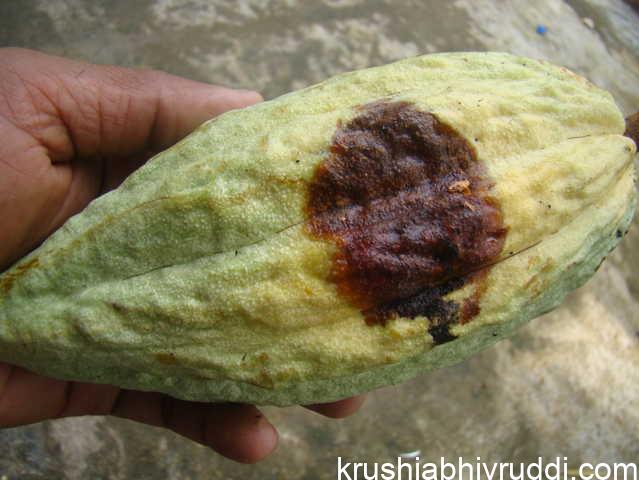
The main culprits are Phytophthora species—especially P. palmivora (widespread), P. megakarya (highly aggressive in some regions), and occasionally P. capsici. These are water-moulds (oomycetes) that produce spores which move in free water and infect pods, chupons, stems, and cushion tissues.
How does it attack the plant?
- Primary infection: Sporangia land on wet cocoa pod surfaces or wounded bark. In water, they release zoospores that swim to the plant surface and penetrate through natural openings or injuries.
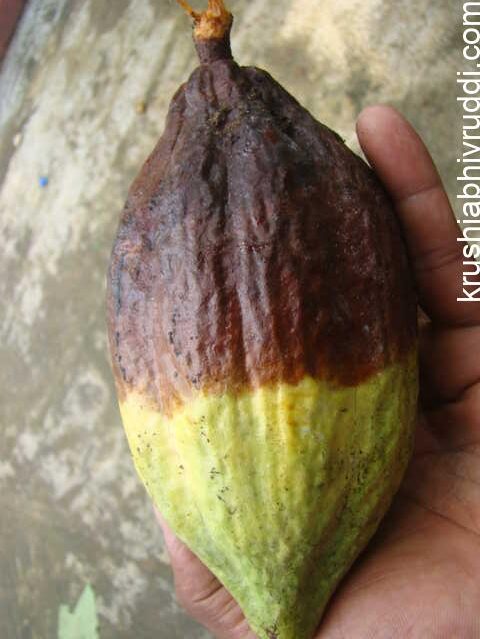
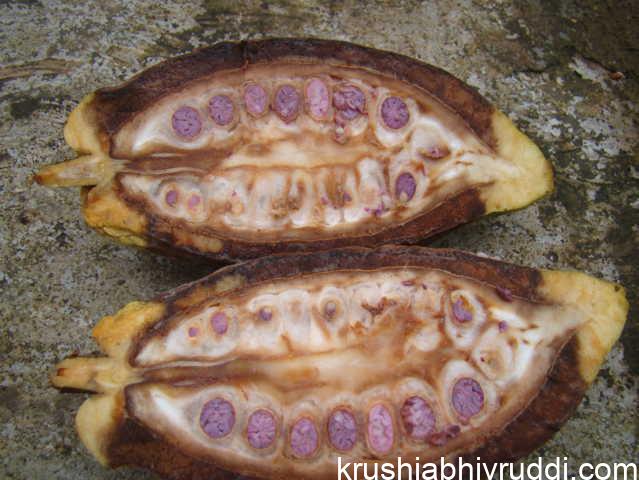
- Pod symptoms: Small dark, water-soaked spots expand rapidly, turning brown to black with a clear margin between healthy and diseased tissue. White fungal growth may appear on wet pods. Seeds inside rot and stick together.
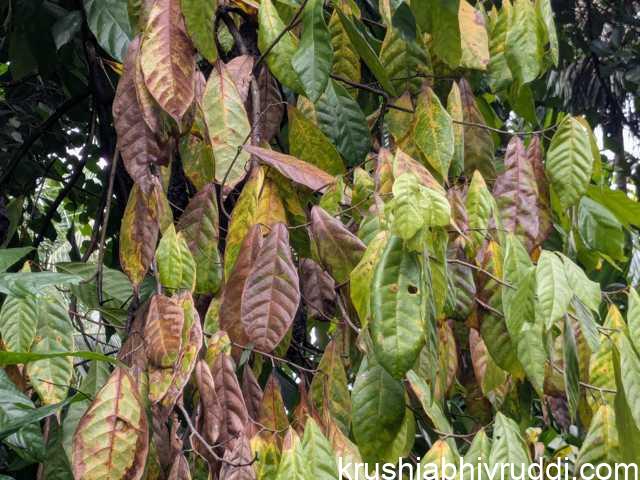
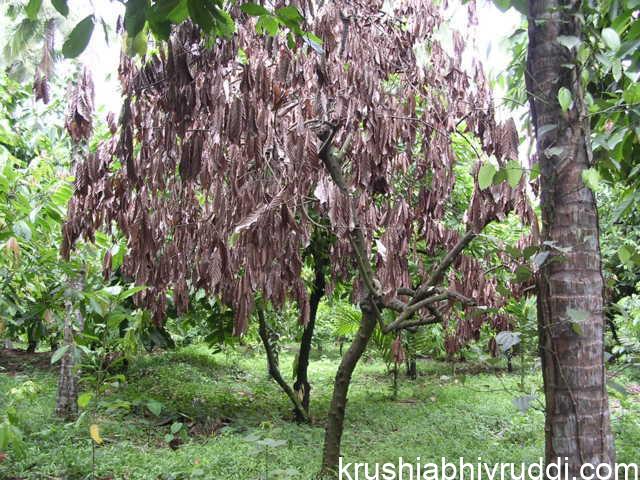
- Leaf fall: It is the visible symptom of infection.
- Stem/cushion canker: Brown cankers on trunk/branches with bleeding exudate; bark cracks and peels, girdling may occur, leading to dieback.
- Disease cycle: Infected pods drop and become mummies that release new spores with every rain, continuing the cycle.
How much crop can be lost?
Losses vary with weather and management. Typical farm losses range from 10–30%, but under prolonged rain and poor sanitation, pod loss can exceed 50%, and in severe outbreaks with highly aggressive strains, even 70%+ of susceptible pods can be destroyed. Stem cankers reduce future bearing by killing cushions and branches.
Integrated Control Measures (what to do now)
1) Sanitation & canopy management
- Harvest every 7–10 days during rains; remove all diseased cocoa pods. Do not heap—bury (30 cm), burn where permitted, or hot-compost away from the block.
- Prune for air and light: maintain a moderate, uniform shade (40–50%), thin dense canopies, remove chupons/low hanging branches.
- Improve drainage: open side drains, break soil pans; keep basins weed-free and slightly raised on heavy soils.
2) Cocoa block hygiene
- Disinfect knives/secateurs in 1% bleach or 70% alcohol between trees.
- Avoid wounding stems; protect harvest cushions.
- Keep paths clean so mud doesn’t splash to pods.
3) Biological options
- Apply Trichoderma (e.g., T. harzianum/T. viride) as bark paint on cankers after scraping to healthy tissue; repeat after 15–20 days.
- Use Bacillus-based biofungicides on pods as a rain-season protectant according to label.
4) Chemical protection (rotate modes of action)
- Protectant sprays on pods and trunk before continuous rains: Copper oxychloride 0.25% or Bordeaux mixture 1% at 20–25 day intervals.
- During high pressure, alternate with a systemic + contact mix such as metalaxyl-M + mancozeb or phosphonate (potassium phosphite) trunk paint/injection as per local recommendations. Always observe pre-harvest intervals and rotate chemistries to avoid resistance.
5) Stem canker treatment
- Cut away infected bark to sound tissue on dry days; paint the margin with copper fungicide or phosphonate, then apply Trichoderma paste. Ensure good collar drainage to keep the trunk base dry.
6) Resistant or tolerant planting material
- Where available, plant tolerant clones/hybrids and keep a diverse mix to reduce block-wide susceptibility.
Preventive Calendar (quick guide)
- Pre-monsoon (4–6 weeks before rains): prune, open drains, first protectant spray.
- Peak rains: harvest & rogue weekly, maintain spray cover every 20–25 days; repair mulch to avoid pod–soil contact.
- Post-monsoon: remove all mummies, inspect trunks for cankers, do curative bark treatments, record hotspots for next season.
Bottom line: Keep the block clean, airy, and well-drained, remove inoculum fast, and maintain a preventive spray/bio-control cover through the wet months. This integrated approach protects current yield and preserves future bearing wood


