


Mango flowering season is the most important stage that decides your final yield. This year, many orchards are showing heavy flowering, but more flowers does not mean more fruits. In mango, only a small percentage of flowers become fruits because a large number of blossoms naturally drop. The real yield depends on fruit set and fruit retention, not just flowering.
To get good harvest, farmers must protect mango flowers from pests, diseases, nutrient stress, moisture imbalance, and unfavorable weather—especially cloudy and humid conditions.
Why Mango Flowers Drop Naturally:
Mango panicles produce two types of flowers:
- Male flowers (staminate): only pollen, no fruit formation
- Bisexual flowers (perfect flowers): can set fruit after pollination
Even in a healthy panicle, male flowers are more, and only the bisexual flowers can convert to fruits. After pollination, the tree may drop flowers due to:
- Weak pollination activity
- Nutrient imbalance
- Sudden weather changes
- Attack of pests and fungal diseases
- Moisture stress (too dry or too wet)
So, the goal is to increase bisexual flower survival and improve pollination + fruit set.
Major Pests That Damage Mango Flowers:
During flowering, soft tissues attract pests. The common flower pests are:
Thrips
Thrips scrape and suck the flower tissues, causing flower drying, blackening, and drop. This also affects pollen.
Hoppers (Mango leaf hoppers)
They suck sap from panicles and flowers, leading to sticky honeydew, poor fruit set, and heavy flower drop.
Mealybugs (sometimes)
If present, they weaken panicles and reduce flowering strength.
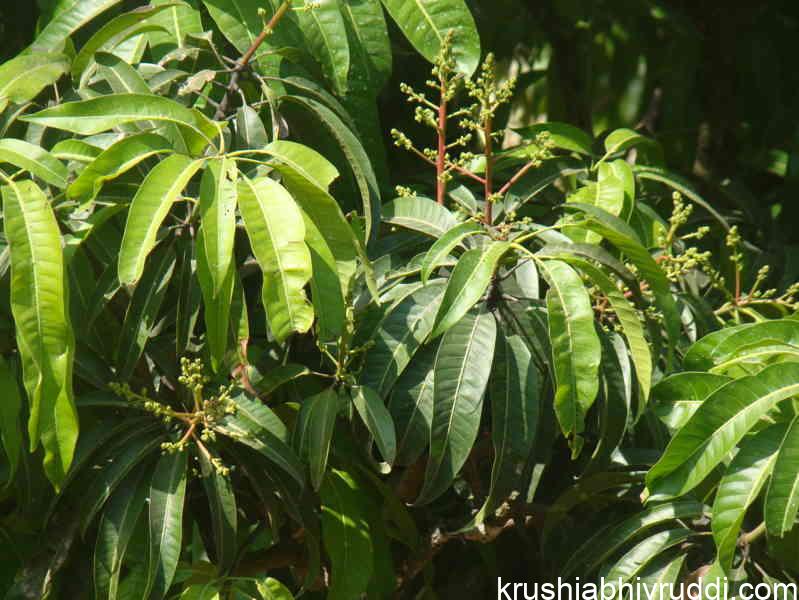
Best insecticide choices for flower protection (rotate molecules):
- Imidacloprid (systemic) – excellent for hoppers
- Thiamethoxam – hopper + sucking pest control
- Lambda cyhalothrin / Cypermethrin – quick knockdown (use carefully in flowering)
- Spinosad / Emamectin – useful mainly when thrips are high
Avoid excess harsh spraying during peak bloom because it can reduce pollinators (bees). Prefer spraying in the evening when bee activity is low.
Major Flower Diseases (Fungus) That Reduce Fruit Set;
Cloudy weather + high humidity is the biggest trigger for flower diseases.
Powdery mildew
White powdery growth on panicles and flowers, leads to flower drying and fruit drop.
Anthracnose (blossom blight)
Causes black spots on panicles, flower rot, and poor fruit retention. It increases during rain, mist, and cloudy climate.
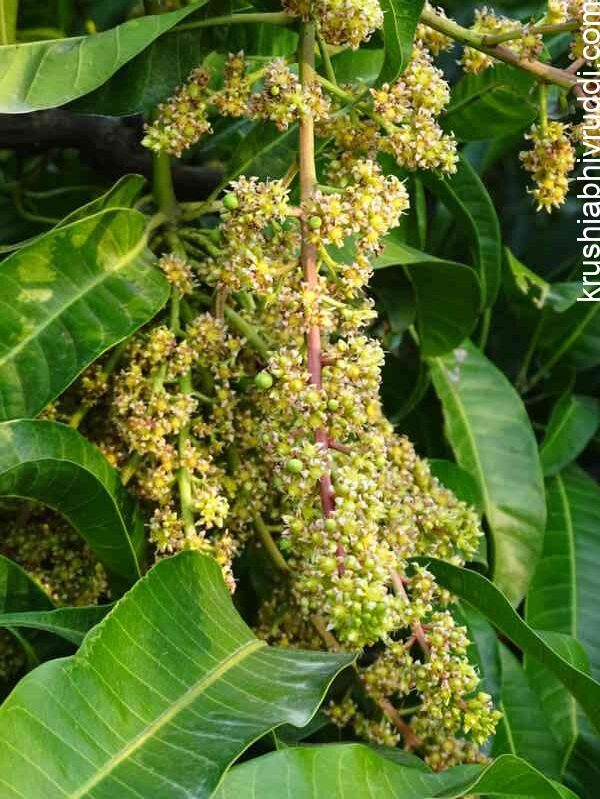
Best fungicides for mango flowering stage (very effective):
- Wettable sulphur – best for powdery mildew (early stage)
- Hexaconazole / Propiconazole / Myclobutanil – strong mildew control
- Carbendazim + Mancozeb – broad protection, blossom health
- Copper oxychloride – helps reduce anthracnose spread (not too frequently on flowers)
- Azoxystrobin / Trifloxystrobin combinations – premium level control and longer protection
The best strategy is preventive spraying before disease becomes visible.
Ideal Time & Schedule for Spraying
For best results, do not wait until flowers start drying. Follow stage-wise spraying:
Spray-1: Early panicle emergence (5–10% flowering)
- Fungicide for mildew/anthracnose + mild insecticide for early hoppers/thrips
Spray-2: Peak flowering (50–60% bloom)
- Focus on flower protection using fungicide + hopper/thrips control
- Spray in evening to protect bees
Spray-3: Marble stage (small fruit set visible)
- Very important to prevent fruit drop and retain young fruits
Spray interval: generally 7–10 days depending on humidity and pest pressure.
In cloudy weather or mist conditions, keep the interval shorter (7 days).
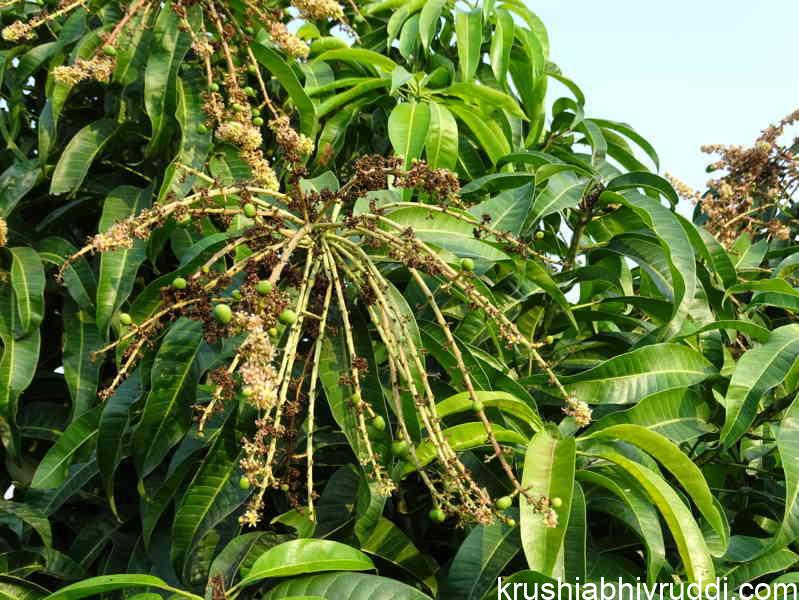
Cloudy Weather, Moisture & Flower Drop:
Cloudy weather reduces pollinator movement and increases humidity. This results in:
- poor pollination
- heavy fungal infection
- weak fruit set
- higher flower and fruit drop
Also, incorrect irrigation damages flowering:
- Too dry soil → moisture stress → flower drop
- Too wet soil → vegetative growth + disease → poor fruit set
Maintain uniform moisture: light irrigation is better than heavy flooding.
Nutrients That Improve Flower Strength & Fruit Set:
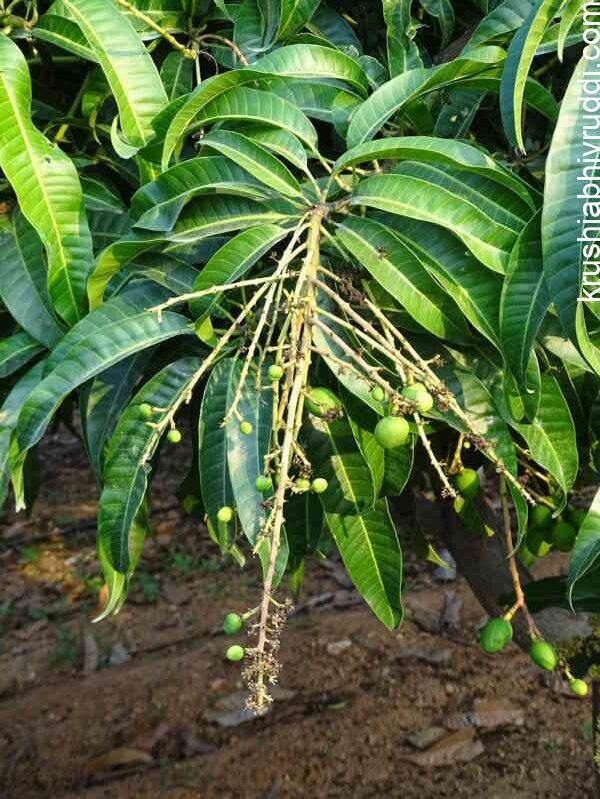
Flowering is a high-energy stage. Mango needs balanced nutrition.
Calcium & Boron
These are the most important for flower retention and fruit set.
- Boron improves pollen germination and fertilization
- Calcium strengthens tissues and reduces drop
Potassium (K)
Improves panicle strength and fruit retention.
Micronutrients (Zn, Mg)
Support better flowering and reduce stress.
Recommended foliar support (during flowering):
- Boron + Calcium spray (low dose, 1–2 sprays)
- Potassium nitrate (if flowering is weak and stress is high)
Avoid excess Nitrogen (Urea) during flowering. Too much nitrogen causes leaf growth instead of fruiting.
Conclusion
Mango yield is not decided by the number of flowers, but by fruit set, retention, and protection during flowering. By controlling hoppers, thrips, powdery mildew, and anthracnose, maintaining proper moisture, and supplying boron-calcium-potassium nutrition, farmers can reduce flower drop and increase healthy fruit set. Most importantly, protect the orchard during cloudy weather, because that is the season when diseases spread fast and fruit drop increases.
Protect flowers early, spray correctly, and maintain balanced nutrition—your harvest will automatically improve.


