


Many farmers and common people often believe that Muriate of Potash (MOP) is a chemical fertilizer this is not true, it is A Mineral Gift from the Earth. It will not harms soil health and beneficial microbes. MOP is actually a natural mineral obtained from the earth, not a product of chemical factories like urea or DAP. It is formed millions of years ago from the evaporation of ancient seas and is mined from underground deposits. After simple processing and purification, it is supplied to farmers as fertilizer.
Like every nutrient, if used in balanced quantity, MOP improves crop growth, yield, and quality. Only excessive use or wrong application can create problems such as soil salinity. Thus, MOP should be seen as a natural mineral gift from the earth that, when applied wisely, benefits both crops and soil. Among different potash fertilizers available, Muriate of Potash (MOP) is the most widely used across the world. It plays a key role in crop production and soil fertility.
What is Muriate of Potash (MOP)?
Muriate of Potash, commonly known as MOP, is the chemical name for Potassium Chloride (KCl). The word “muriate” comes from the old Latin term for chloride. It is the most common source of potash fertilizer in agriculture and contains around 60% potassium oxide (K₂O) equivalent. Potassium in MOP is readily available to plants, which makes it a quick and effective nutrient source.
Raw Material and Origin of MOP
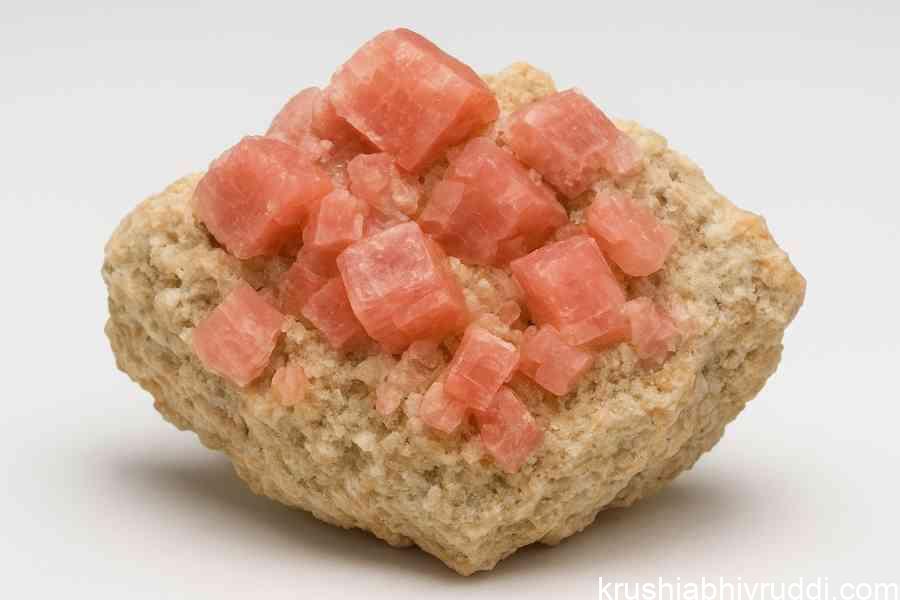
The raw material for MOP is natural potash minerals, mainly sylvinite (a mixture of potassium chloride and sodium chloride) and carnallite (a hydrated potassium magnesium chloride).
These minerals are extracted from underground deposits formed millions of years ago due to the evaporation of ancient seas. Major deposits of potash are found in Canada, Russia, Belarus, Germany, China, Israel, and Jordan. Canada is the largest producer and exporter of MOP.
Thus, MOP is not chemically manufactured in factories but obtained from natural mineral deposits. After mining, the ore is refined to separate potassium chloride from common salt (sodium chloride). Sometimes, it is further processed into granules or different grades for agricultural use.
Where is MOP Used?
MOP is mainly used as a fertilizer in agriculture to supply potassium, which helps in:
- Enhancing root growth and strength.
- Improving water-use efficiency and drought resistance.
- Increasing crop yield and quality.
- Strengthening plants against diseases and pests.
It is widely used for cereal crops (rice, wheat, maize), sugarcane, oilseeds, pulses, vegetables, fruits, and plantation crops like cotton, tea, and coffee.
Apart from agriculture, potassium chloride also has limited use in the chemical industry, water softening, and food processing, but its main importance lies in farming.
Advantages of MOP
- Rich Potassium Content – Contains about 60% K₂O equivalent, making it a highly concentrated source of potassium.
- Immediate Availability – Potassium in MOP dissolves quickly in soil water and is readily absorbed by plants.
- Increases Yield and Quality – Improves size, shape, color, and storage life of fruits, vegetables, and other produce.
- Boosts Resistance – Helps crops resist drought, lodging, pests, and many diseases.
- Affordable and Easily Available – Compared to other potash fertilizers like Sulphate of Potash (SOP), MOP is cheaper and more widely available.
Disadvantages of MOP
- High Chloride Content – MOP contains chloride, which can be harmful for chloride-sensitive crops like tobacco, potato, grapes, citrus, and some vegetables.
- Soil Salinity Risk – Continuous and excessive use may increase soil salinity, especially in light-textured or poorly drained soils.
- Not Suitable for All Crops – Crops requiring chloride-free potassium (such as fruits, tea, and some high-value crops) respond better to SOP than MOP.
- Environmental Concerns – Overuse can lead to nutrient imbalance in soil and affect microbial activity.
Types of MOP
MOP is available in different physical forms depending on processing:
- White MOP – A purified form of potassium chloride, mostly used in the chemical industry and sometimes in agriculture for chloride-tolerant crops.
- Pink or Red MOP – The most common agricultural grade, containing natural iron oxide impurities that give it a pink color.
- Granular MOP – Larger, uniform granules suitable for mechanical application and blending with other fertilizers.
- Standard/Crystal MOP – Fine crystals, usually cheaper, but less suitable for blending.
The choice of type depends on crop requirement, soil type, and method of application.
Is MOP Natural or Chemically Prepared?
MOP is a natural mineral product. It is mined from potash deposits formed by the evaporation of prehistoric seas. However, it is processed and refined to remove impurities and convert into usable fertilizer forms. So, it is not synthetically manufactured like urea or DAP but naturally sourced and purified.
Muriate of Potash (MOP) is the most commonly used potassium fertilizer in the world. Extracted from natural potash minerals, it supplies crops with readily available potassium that improves yield, quality, and stress resistance. While it has clear advantages like affordability and high nutrient content, farmers must be careful with its use on chloride-sensitive crops and in soils prone to salinity. Choosing the right type of MOP and applying it as per crop and soil requirement ensures maximum benefit.
In short, MOP remains an essential fertilizer in modern agriculture, bridging the nutrient needs of crops and ensuring food security for millions.


